Reflection guide6 min read
Inattentive ADHD in adults
Plain English guide to inattentive ADHD traits in adults, why they get missed, everyday examples, and what self reflection can and cannot tell you.
Short answer
Inattentive ADHD in adults
Predominantly inattentive presentation is one of the three ADHD presentations in current diagnostic criteria. It applies when the required inattentive symptoms and broader diagnostic conditions are met without enough current hyperactive-impulsive symptoms for the combined presentation. Examples can involve sustained attention, listening, organisation, follow-through, losing items, distraction, or forgetfulness. Working-memory difficulty may be studied alongside ADHD but is not itself enough to establish the presentation. A self reflection tool cannot confirm or rule out ADHD or separate it from anxiety, depression, sleep problems, medication effects, substance use, physical illness, or situational demands.
What this can help with
Naming examples, understanding common language, and preparing notes for reflection or a professional conversation.
What this cannot do
Confirm, diagnose, rule out, or replace assessment by a qualified professional.
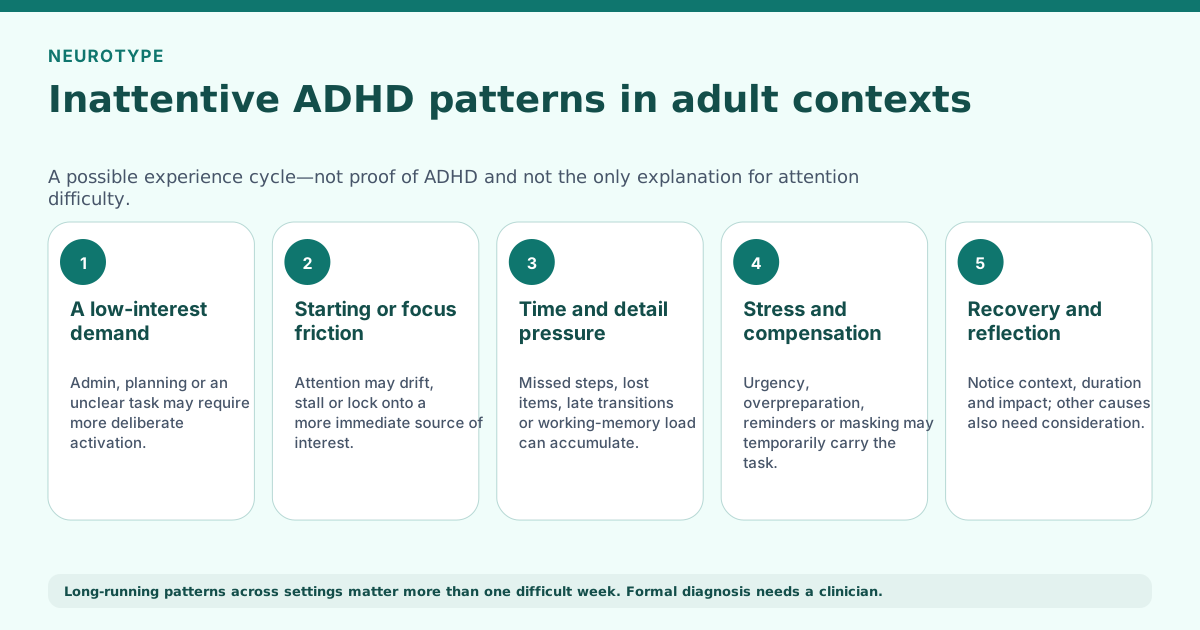
The five-stage scenario diagram shows a possible adult experience cycle without claiming it proves ADHD. It highlights context, duration, impact and alternative explanations.
Related NeuroType path
Try the ADHD trait reflection
Use the original NeuroType executive function tool to organise examples around starting, focus, planning, and follow-through.
Open related pathFree, no account needed. Not a diagnosis.
Short answer
Predominantly inattentive presentation is one of the three ADHD presentations in current diagnostic criteria. It applies when the required inattentive symptoms and broader diagnostic conditions are met without enough current hyperactive-impulsive symptoms for the combined presentation. Examples can involve sustained attention, listening, organisation, follow-through, losing items, distraction, or forgetfulness. Working-memory difficulty may be studied alongside ADHD but is not itself enough to establish the presentation. A self reflection tool cannot confirm or rule out ADHD or separate it from anxiety, depression, sleep problems, medication effects, substance use, physical illness, or situational demands.
Why inattentive ADHD often goes unnoticed in adults
Recognition can be affected by referral practices, symptom severity, impairment, co-occurring conditions, and whether behaviour attracts concern from other people. Hinshaw and Nguyen's 2022 review discusses underrepresentation, referral bias, and developmental factors in girls and women; it does not establish one hidden presentation or show that every quiet or high-performing adult is overlooked.
Anxiety, depression, sleep problems, trauma-related symptoms, medicines, substances, and physical conditions can overlap with attention complaints or co-occur with ADHD. A clinician considers all of these rather than assuming that one is the surface expression of another.
What inattentive ADHD looks like day to day for adults
Possible everyday examples include repeatedly losing the thread while reading or listening, overlooking details, difficulty organising multi-step tasks, forgetting appointments, losing necessary items, or leaving tasks unfinished. These examples are non-specific and many adults without ADHD experience them.
For ADHD assessment, clinicians consider whether several relevant symptoms were present before age 12, persist over time, appear in two or more settings, interfere with functioning, and are not better explained by another condition. Frequency, context, history, and impact matter more than resemblance to any single example.
How inattentive presentation differs from hyperactive and combined
Current criteria describe predominantly inattentive, predominantly hyperactive-impulsive, and combined presentations. The presentation specifier depends on which symptom thresholds are met during the relevant assessment period; it is not a personality type.
Adults may show hyperactive-impulsive symptoms differently from familiar childhood stereotypes, but internal restlessness or racing thoughts alone does not establish that symptom cluster. Symptoms and impairment can change with age and context. A clinician should assess new or changing attention, activity, sleep, mood, or cognitive symptoms rather than assuming they are a presentation shift.
Why inattentive ADHD is often misread as anxiety or depression
Difficulty concentrating, sleep problems, irritability, and feeling overwhelmed can occur with ADHD, anxiety, depression, trauma-related conditions, sleep disorders, substances, medications, hormonal or medical conditions, and ordinary periods of high demand. More than one can apply at the same time.
There is no reliable rule such as 'worry means anxiety' or 'lifelong distraction means ADHD' that can separate them in an article. Clinicians consider developmental history, onset and course, symptoms beyond attention, functioning across settings, physical health, sleep, substances and medications, and collateral information when available. This article can help you record examples and timeframes, but it cannot make that differential diagnosis.
Reflection prompts for inattentive patterns
If this resonates, the following prompts can help you build clearer examples to bring to a professional conversation or to a NeuroType reflection tool.
When does your attention feel easiest? Note settings, time of day, type of task, and what makes the difference.
When does it feel hardest? Note the same variables.
Which tasks have you been avoiding for a long time even though they are not difficult? What is the pattern in those tasks?
What external systems are you using to stay on top of life: alarms, lists, calendars, body doubling, reminders from a partner? Which ones work and which ones do you forget to use?
When did you first remember struggling with attention, follow through, or organisation? School age, university, early jobs, parenthood, a particular life change?
Which of the everyday examples above sound familiar across many parts of life, and which only show up in one setting?
Writing these down once, then revisiting in a week, often produces a more useful set of examples than trying to remember on the spot.
How NeuroType can help and where to take this further
NeuroType offers an original ADHD trait reflection tool that asks adult-focused questions about attention, working memory, follow through, and emotional regulation. It is not ASRS and does not reproduce ASRS items. Individual answers stay in the browser during the free flow. After completing it you get a private summary describing which patterns stood out.
For a broader plain English overview of all adult ADHD traits, read adult ADHD traits: a plain English overview for self reflection. For executive function patterns that often sit alongside inattentive ADHD, read executive dysfunction in adults. For the specific moment of struggling to begin a task, read task initiation and ADHD traits.
If the patterns you notice are affecting work, study, finances, sleep, mental health, or relationships, and the patterns have been present for a long time, talking with a qualified clinician about adult ADHD assessment may be useful. The article on how to talk to a doctor about ADHD or autism covers what to prepare. NeuroType cannot refer you for assessment and is not a clinical service.
Source and review status
This article is original NeuroType editorial content. It references the National Institute of Mental Health overview of adult ADHD, the 2021 international consensus statement on adult ADHD led by Faraone, and the 2022 review by Hinshaw and Nguyen on women and ADHD identification. No ASRS or other licensed instrument items are reproduced. This page is reviewed by the NeuroType editorial team and is not clinical advice. Corrections can be sent to hello@neurotype.app.
Frequently asked questions
- What is inattentive ADHD in adults?
- Predominantly inattentive presentation is one of three ADHD presentations in current criteria. It applies when the required inattentive symptoms and broader diagnostic conditions are met without enough current hyperactive-impulsive symptoms for the combined presentation. A qualified clinician must assess onset, settings, impairment, and other explanations; an online pattern description cannot establish it.
- Why is inattentive ADHD missed more often in adults?
- Recognition can be affected by referral bias, symptom severity, impairment, co-occurring conditions, and whether behaviour attracts concern from others. Research reviews describe underrecognition in girls and women, but the cited evidence does not support one quiet presentation or show that every predominantly inattentive adult is identified later than people with other presentations.
- Can I have ADHD without being hyperactive?
- Yes. Current criteria include a predominantly inattentive presentation alongside hyperactive-impulsive and combined presentations. Whether the required criteria are met is a question for a qualified clinician, who considers developmental history, impairment across settings, and explanations such as anxiety, depression, sleep difficulty, medicines, substances, physical health, or situational demands.
- How is inattentive ADHD different from anxiety in adults?
- They can overlap or co-occur, and no single symptom or timing rule separates them safely. A clinician considers developmental history, onset and course, symptoms beyond attention, functioning across settings, sleep, physical health, substances and medications, and other possible explanations. A self-reflection article cannot make that differential diagnosis.
- What should I do if a lot of this resonates?
- Write down specific everyday examples across different parts of life: work, home, relationships, admin, sleep, and self care. Note when patterns are easier and harder. Notice which external systems you rely on to stay on top of life. If patterns are persistent, present across multiple settings, and have been familiar since childhood, talking with a qualified clinician about adult ADHD assessment may be useful. NeuroType has an ADHD trait reflection tool that can help you organise examples privately in your browser before that conversation.
Where to go next
Try the ADHD trait reflection
Use the original NeuroType executive function tool to organise examples around starting, focus, planning, and follow-through.
Start this reflectionFree, no account needed. Not a diagnosis.
Was this page helpful?
Related NeuroType pages
- ADHD trait reflection tool
- Adult ADHD traits: a plain English overview for self reflection
- Executive dysfunction in adults: a self reflection guide
- Task initiation and ADHD traits: why starting can feel harder than continuing
- How to talk to a professional about ADHD or autism concerns as an adult
- NeuroType disclaimer
- Share feedback with NeuroType
Sources and limits
Last updated: 2026-08-07. Review status: founder reviewed. Sources checked. NeuroType lists sources for context; they do not make this page clinical advice or diagnostic evidence.
Sources and references
Attention-Deficit/Hyperactivity Disorder (ADHD)
The World Federation of ADHD International Consensus Statement: 208 Evidence-based conclusions about the disorder
Annual Research Review: Attention-deficit/hyperactivity disorder in girls and women: underrepresentation, longitudinal processes, and key directions