Reflection guide8 min read
Neurotype meaning: a plain English definition
Neurotype means a pattern in how someone learns, communicates, and processes information. Compare related terms, everyday examples, and diagnostic limits.
Short answer
Neurotype meaning: a plain English definition
A neurotype describes a pattern in how a person learns, communicates, and processes information because of how their brain works. In everyday language, it is a way to describe how a mind tends to work.
What this can help with
Naming examples, understanding common language, and preparing notes for reflection or a professional conversation.
What this cannot do
Confirm, diagnose, rule out, or replace assessment by a qualified professional.
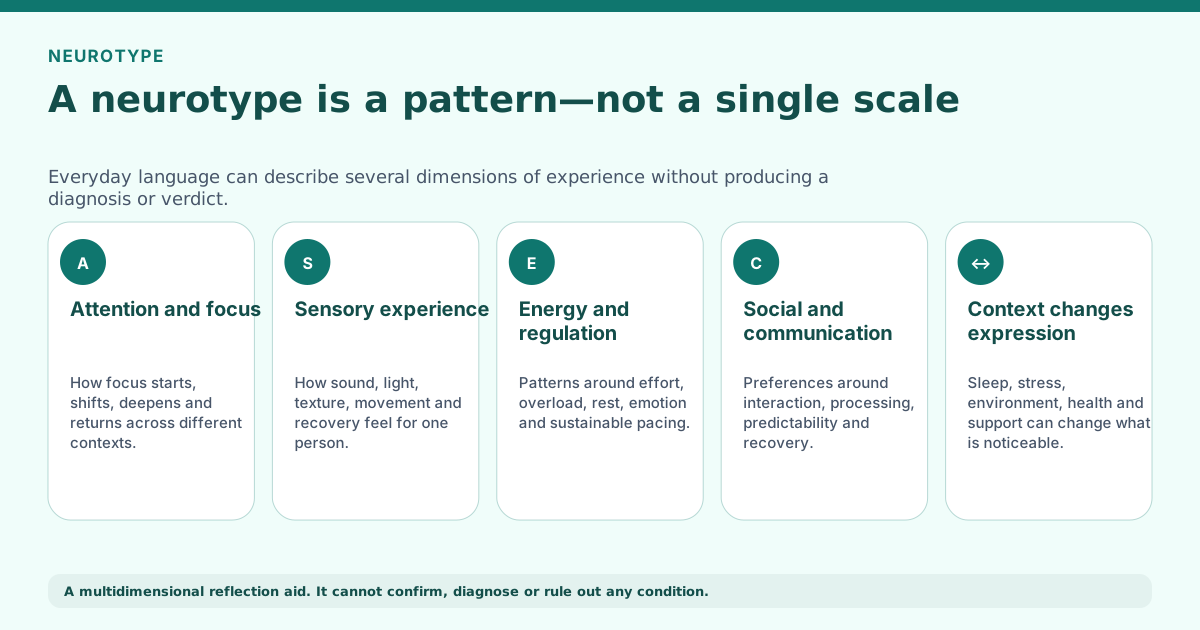
The diagram shows attention, sensory experience, energy and regulation, social and communication patterns, and context as separate but interacting dimensions. It explicitly states that the picture is a reflection aid, not a diagnosis.
Related NeuroType path
See all six free reflection tools
Pick the tool that matches what you came here about. Most take 6 to 14 minutes, and your answers stay in this browser.
Open related pathFree, no account needed. Not a diagnosis.
What neurotype means
A neurotype describes a pattern in how a person learns, communicates, and processes information because of how their brain works. In everyday language, it is a way to describe how a mind tends to work.
People use the word in discussions of attention, sensory experience, social communication, and other differences. It does not confirm or rule out a condition. Formal diagnosis requires assessment by a qualified clinician. NeuroType is also the name of this site, which offers self reflection tools for adults aged 18 and over; the word has a wider meaning than the brand.
Neurotype, neurodiversity, neurodivergent, and neurotypical
These words describe different things, even though people often use them together.
Neurotype refers to a pattern in how a person's mind works. Neurodiversity refers to variation across people's brains and minds: it describes a population, rather than a diagnosis for one person.
Neurodivergent is an umbrella description for someone whose processing differs from what is treated as typical. Neurotypical describes someone whose processing broadly matches those expectations. Neither word assigns a condition or replaces assessment by a qualified clinician, and their boundaries vary across communities and contexts.
Everyone has ways of learning, communicating, and processing information; using the word neurotype does not automatically mean someone is neurodivergent. For more detail, read what neurodivergent means or the comparison of neurodivergent and neurotypical.
Everyday examples of what a neurotype can describe
The following are illustrative examples, not symptoms to tick off or a way to identify a condition.
Learning: one adult may prefer written steps they can revisit, while another finds a spoken explanation easier to follow.
Communication: someone may prefer direct wording and time to think before replying. Another person may find an unplanned conversation easier.
Attention and sensory experience: a quiet room may make a task more manageable for one person, while another prefers background sound or movement.
These observations describe preferences and experiences. They do not sort people into fixed types, and the same person may respond differently with a different task, environment, or level of fatigue. Two people who share a diagnosis can still have very different strengths, difficulties, and support needs.
A useful reflection note describes the situation and its impact: 'I follow meeting decisions more easily when the actions are written down.' It is more specific than trying to infer a neurotype from one preference.
NeuroType the brand, neurotype the word
NeuroType with a capital T is this website: a private reflection product for adults exploring attention, sensory preferences, masking, social effort, recovery, and task friction. The lowercase word neurotype is broader language for a pattern in how a mind tends to work.
That distinction matters. NeuroType can help you organise examples in plain language, but the brand does not own the word and does not turn the word into a result. Reading about a neurotype can make your patterns easier to describe. It cannot tell you whether ADHD, autism, AuDHD, or any other condition applies to you.
Where the word neurotype comes from
Neurotype is used in neurodiversity discussions, but its scope is not fixed by a clinical manual. Neurodiversity refers broadly to variation in human brains and minds; neurodivergent and neurotypical are community-used descriptions whose boundaries vary. People may use neurotype for a named condition, a broad cognitive pattern, or an individual's overall profile.
This language can describe difference without assigning worth, but it does not erase disability, support needs, or medical conditions. ADHD and autism remain diagnosable neurodevelopmental conditions; calling them neurotypes does not change their diagnostic criteria or establish that either applies to an individual.
What a neurotype is and is not
It helps to be precise. A neurotype is a description of patterns. It is a way to talk about how attention, senses, social energy, and processing tend to behave for one person over time. It is useful because it gives people shared words for experiences that are otherwise hard to explain.
A neurotype is not a medical label, and it is not a test result. The word does not assign a condition, and it does not replace a formal assessment. Two people who both describe themselves with the same neurotype can be very different. The same person can experience their patterns more strongly in some seasons of life than others, depending on stress, sleep, workload, health, and environment. Treating a neurotype as a fixed verdict misses how much context matters.
Neurotypes people often talk about
People sometimes describe autism and ADHD as neurotypes. Both are also formal diagnostic categories with criteria that cannot be established from a trait list. AuDHD is informal language generally used for co-occurring autism and ADHD; it is not a separate diagnosis.
Sensory sensitivity, social camouflaging, focused interests, executive-function difficulty, or strong reactions to rejection may be discussed in the same communities, but none is specific to one condition. 'Rejection sensitive dysphoria' is not a recognised diagnosis. These descriptions can support reflection, but they should not be treated as a taxonomy that identifies a person's condition.
Why people find the idea useful
For many adults, finding the word neurotype is a relief. It offers a way to describe long-running experiences without framing them as personal failings. Instead of asking why can I not just be normal, a person can ask what is my pattern, what does it need, and what makes it easier or harder.
That shift is practical. It helps with self understanding, with explaining needs to other people, and with finding adjustments that actually fit. It can also reduce shame, because a pattern that has a name and a community around it feels less like a private flaw. The useful output is not a label to wear. It is a clearer set of examples about how you work and what helps.
How NeuroType the site fits in
This site, NeuroType, offers free browser based self reflection tools for adults who want to explore their own patterns. There is an original sensory preferences tool, a masking reflection tool, an ADHD trait reflection tool, and a guided journey that walks through several of them in turn. The About NeuroType page explains the product boundaries in more detail.
These tools help you organise your own observations. They describe patterns in plain language. They do not diagnose, they do not confirm or rule out any condition, and they keep individual answers in your browser during the free flow. If you want the wider picture first, the adult ADHD traits overview, autism masking guide for adults, and AuDHD guide are good places to start.
What to do next with this
If the idea of a neurotype resonates, treat it as an invitation to notice, not a conclusion to reach. Write down specific situations: what happens, when it happens, how long it has been present, what makes it easier, and what makes it harder. Patterns that have been present across many parts of life and many years carry more weight as reflection material than patterns tied to a single stressful stretch.
If your patterns are affecting work, study, relationships, finances, or daily care, and they have been present for a long time, talking with a qualified professional about formal assessment may be worth it. NeuroType cannot refer you, and it cannot tell you which explanation fits. It can help you arrive better prepared. If you are weighing this up, the companion guide am I neurodivergent walks through the question calmly.
Source and review status
This article is original NeuroType editorial content written in plain English. It uses a dictionary source for the term neurotype and an independent health-information source for neurodivergent language. It does not reproduce licensed clinical instrument items. It is reviewed by the NeuroType editorial team and is not medical or psychological advice. Corrections can be sent to hello@neurotype.app.
Frequently asked questions
- What does neurotype mean in simple terms?
- A neurotype describes a pattern in how someone learns, communicates, and processes information because of how their brain works. The word is used in neurodiversity discussions. It is descriptive, not a diagnosis, and does not confirm or rule out a condition.
- Does everyone have a neurotype?
- Everyone has ways of learning, communicating, and processing information that can be described using the word neurotype. That does not mean everyone is neurodivergent or has a diagnosed condition. There is no universally agreed list of neurotypes that assigns each person to one category.
- What is the difference between neurotype, neurodivergent, and neurotypical?
- Neurodiversity is the natural range of brains across a population. Neurodivergent describes a person whose patterns differ from what is most common. Neurotypical describes patterns that match the common expectation. A neurotype is the specific pattern itself, the shape of how one mind tends to work.
- Is a neurotype a diagnosis?
- No. A neurotype is a way of describing patterns, not a medical label or a test result. Using the word does not assign a condition and does not replace a formal assessment by a qualified professional.
- What are some examples of neurotypes?
- People sometimes describe autism and ADHD as neurotypes; both are also formal diagnostic categories. AuDHD is informal language for co-occurring autism and ADHD, not a separate diagnosis. Other experiences discussed in neurodivergent communities include sensory differences and social camouflaging, but these are not diagnostic on their own.
- How can I explore my own neurotype?
- You can start by noticing and writing down specific everyday examples of how you work and what helps. NeuroType offers free browser based self reflection tools, including a guided journey, that help you organise those observations in plain language. They describe patterns and do not diagnose.
Where to go next
See all six free reflection tools
Pick the tool that matches what you came here about. Most take 6 to 14 minutes, and your answers stay in this browser.
Start this reflectionFree, no account needed. Not a diagnosis.
Was this page helpful?
Related NeuroType pages
- The guided NeuroType journey
- About NeuroType
- Sensory preferences reflection tool
- Masking reflection tool
- ADHD trait reflection tool
- What is AuDHD? A plain English guide for adults
- Am I neurodivergent? A self reflection guide
- Neurodivergent vs neurotypical: the difference
- What does neurodivergent mean? A clear guide
- Adult ADHD traits: a plain English overview for self reflection
- Autism masking in adults: how camouflaging works and why it matters
- NeuroType disclaimer
- All six free reflection tools
- Neurotype types explained
Sources and limits
Last updated: 2026-10-14. Review status: founder reviewed. Sources checked. NeuroType lists sources for context; they do not make this page clinical advice or diagnostic evidence.
Sources and references
Neurotype
Neurodivergent: What It Is, Symptoms & Types