Evidence-informed articles
NeuroType articles
Longer evidence-informed articles for adults exploring ADHD, autism, AuDHD, masking and sensory patterns. Not diagnosis or medical advice.
Use these as deeper reading after a guide or reflection page. The articles explain language, examples, and limits; they do not confirm, diagnose, or rule out any condition.
If you are here for the word itself, what is a neurotype gives the definition and types of neurotypes covers how people group the terms.
Explore the patterns visually
Original educational diagrams provide careful language for adult self reflection. They describe patterns and context, not diagnoses or clinical conclusions.
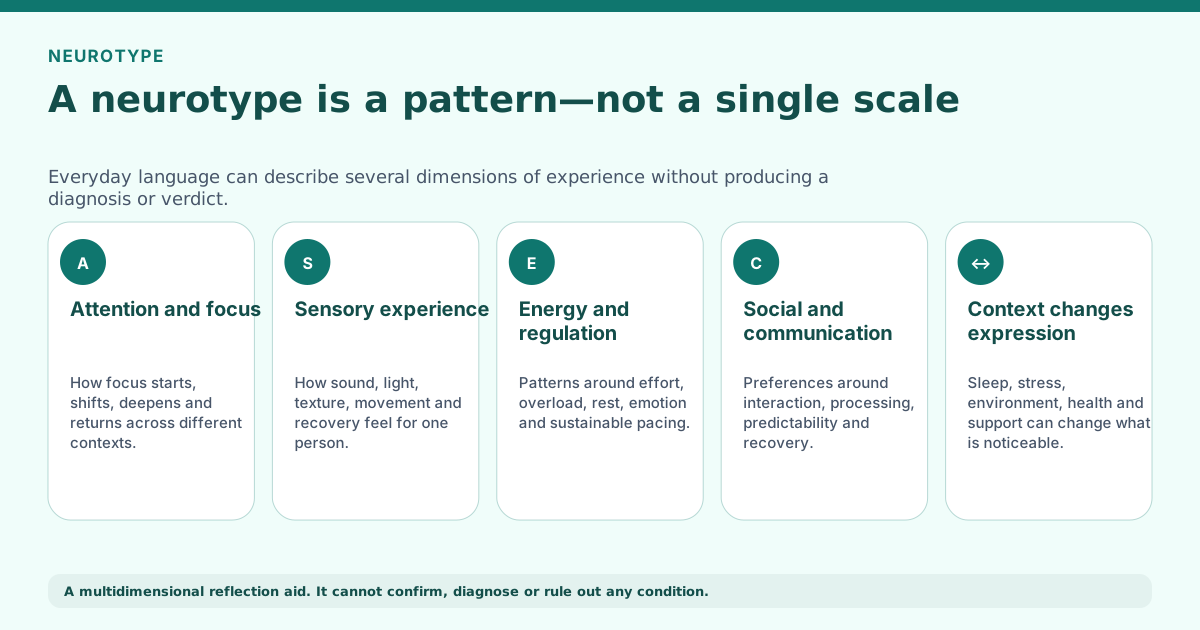
Neurotype as a multidimensional profile
Picture attention, sensory experience, regulation, social patterns and context as interacting dimensions.
Open the visual explainer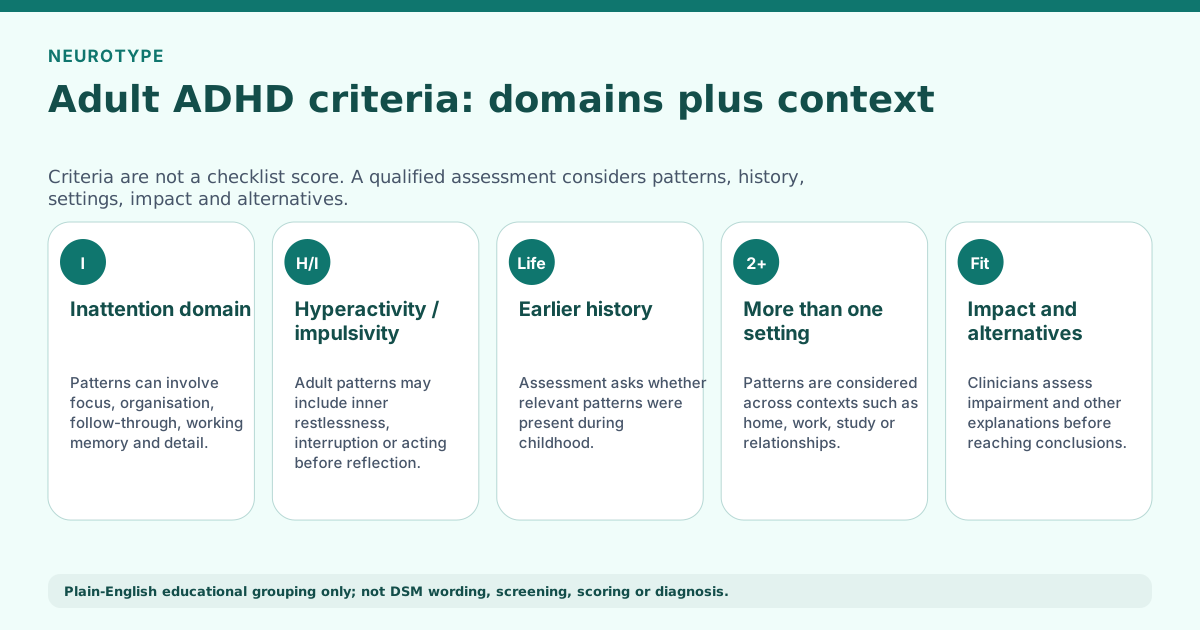
Adult ADHD assessment context
See how symptom domains sit alongside history, settings, impact and alternative explanations.
Open the visual explainer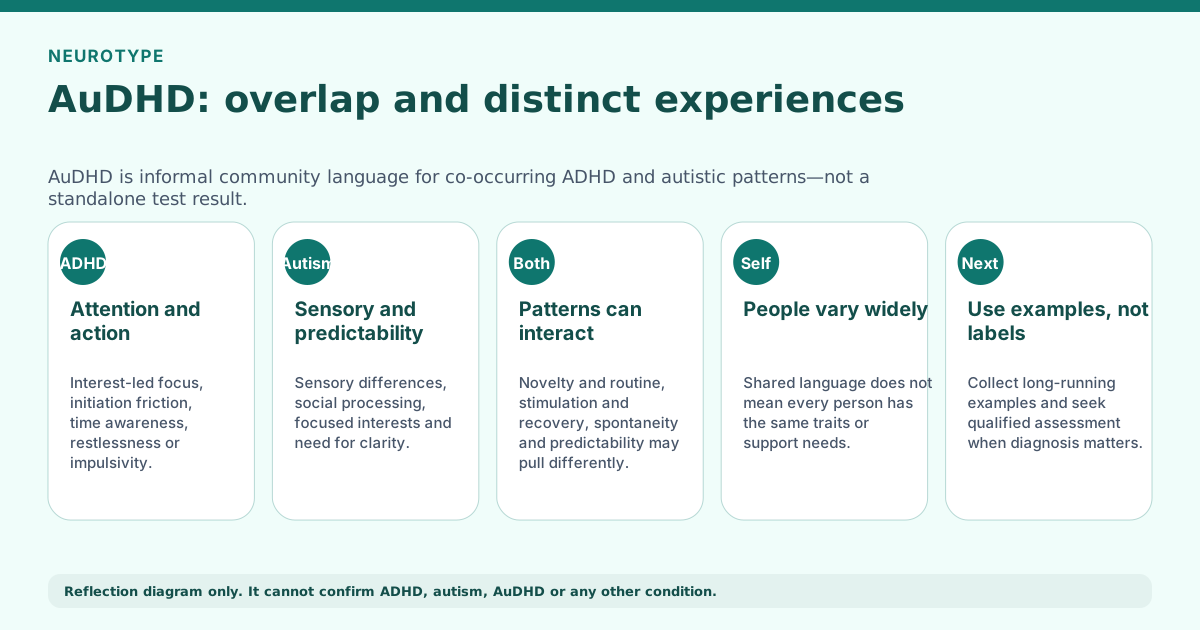
AuDHD overlap and distinct patterns
Explore informal overlap language while keeping individual variation and qualified assessment visible.
Open the visual explainer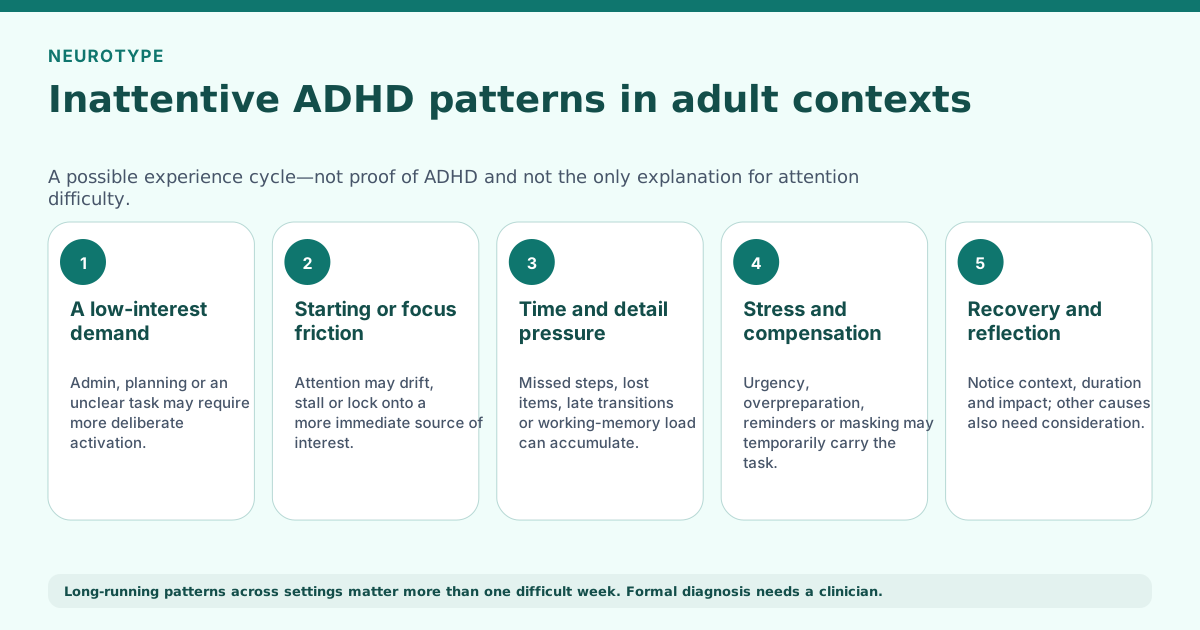
An adult attention-friction cycle
Follow one possible cycle through starting difficulty, pressure, compensation, recovery and reflection.
Open the visual explainerHow to use these articles
These articles are for adults who want careful language before, during, or after self reflection. A page might help when a phrase sounds familiar but still feels vague, when an online example sounds too certain, or when you want to separate an observation from a conclusion. NeuroType keeps the focus on patterns, context, limits, and next questions rather than certainty.
A practical way to use these articles is to choose one topic, read for examples rather than answers, and make a short note about what does and does not fit. Someone reading about masking might write down the gap between visible social ease and private recovery time. Someone reading about task initiation might note which tasks are hard to start, what changes when structure is added, and whether the same friction appears at work, study, home, or in admin-heavy life tasks.
The articles are also useful before a professional conversation. They can help you turn a vague concern into concrete examples: what happens, how long it has been present, what impact it has, and what support has already been tried. They are not a referral route, not crisis support, and not a substitute for assessment by a qualified professional.
Examples inside NeuroType
After the masking reflection
If the masking tool helps you notice social preparation, self-monitoring, suppression, or recovery strain, the masking articles can give you plain-English language for those notes. They also keep the boundary visible: masking language does not identify autism or any other condition on its own.
Before using the profile hub
If several areas feel relevant, such as sensory load, task friction, rejection sensitivity, and social recovery, articles can help you decide what to record in your browser-local profile. The goal is a usable reflection map, not a single label or a clinical answer.
These examples are specific to NeuroType because the product handles sensitive self reflection data. Individual answers stay in the browser during the free tools, and article reading does not require sending personal examples to a server. Use the writing prompts privately, then decide whether any persistent or impairing pattern is worth discussing with a qualified professional.
Frequently asked questions
- Are NeuroType articles diagnostic?
- No. NeuroType articles are for adult self reflection and education. They can help you organise examples and questions, but they cannot confirm, rule out, or diagnose any condition.
- How should I use an article after taking a NeuroType tool?
- Use the article to add context to your private results. Look for examples that describe everyday situations, then write down what happens, where it happens, and what support or adjustment seems to help.
- Do the articles replace professional assessment?
- No. Formal diagnosis requires a qualified clinician or other appropriately qualified professional. Articles can support preparation for that conversation, but they are not medical or psychological advice.
- Why are some topics handled cautiously?
- NeuroType covers sensitive adult trait patterns and some licensed or source-dependent instruments. Pages avoid questionnaire item copying, diagnostic certainty, and claims that would need clinical review.
Browse the articles
Start with the topic closest to the pattern you are trying to name. Each article links to related NeuroType pages so you can move from broad language to a more focused reflection tool or guide.
Adult ADHD traits: a plain English overview for self reflection
A non diagnostic overview of adult ADHD traits: inattention, hyperactivity, impulsivity, and emotional regulation, in plain English.
Read the guide →Autism masking in adults: how camouflaging works and why it matters
A non diagnostic guide to autism masking and camouflaging in adults: assimilation, compensation, masking, and the cost of masking long term.
Read the guide →Sensory processing in adults: a plain English self reflection guide
A non diagnostic guide to adult sensory processing: hypersensitivity, hyposensitivity, sensory systems, and sensory overload.
Read the guide →Inattentive ADHD in adults
Plain English guide to inattentive ADHD traits in adults, why they get missed, everyday examples, and what self reflection can and cannot tell you.
Read the guide →ADHD time blindness explained: why time feels invisible to some adults
Time blindness in adult ADHD: what it is in research terms, how it shows up day to day, and what helps. Plain English and non diagnostic.
Read the guide →ADHD hyperfocus in adults: when intense attention helps and when it hurts
ADHD hyperfocus in adults: how the informal term is used, what limited research shows, and why it is not an ADHD criterion or diagnosis.
Read the guide →Working memory and adult ADHD: why thoughts disappear mid-task
Working memory in adult ADHD: what working memory is, how research describes the link, what it looks like day to day, and what helps.
Read the guide →ADHD emotional dysregulation in adults: what it looks like and why
Emotional dysregulation in adult ADHD: what research says about the link, how it shows up day to day, and why it is not a character flaw.
Read the guide →ADHD vs anxiety in adults: how they overlap and how they differ
Adult ADHD and anxiety compared: where they overlap, where they differ in mechanism, and why ADHD is often misdiagnosed as anxiety in women.
Read the guide →Late-diagnosed ADHD in women: why it gets missed and what late identification feels like
Late-diagnosed ADHD in women: evidence on under-recognition, adult identification, and what research can and cannot explain.
Read the guide →ADHD and procrastination: why starting feels impossible for some adults
ADHD related procrastination in adults: why it is not laziness, what is actually happening, and practical strategies adults try.
Read the guide →ADHD overstimulation at work: what it looks like and what helps
Why office environments amplify ADHD load, what reasonable adjustments can look like, and how to reflect on your own triggers at work.
Read the guide →Unmasking autism: a careful guide for adults
Unmasking autism for adults: what unmasking is and is not, safety considerations, and small first steps. Plain English and non diagnostic.
Read the guide →Autistic burnout in adults
Plain English guide to autistic burnout in adults, masking, demand load, overlap with depression and ADHD burnout, and self reflection limits.
Read the guide →Late-diagnosed autism in women
Plain English guide to late-diagnosed autism in women, masking, missed signs, adult identification, and what self reflection can and cannot tell you.
Read the guide →Camouflaging vs masking in autism: are they actually different?
Camouflaging and masking in autism research: how the terms are used, where they overlap, and the three CAT-Q subscales.
Read the guide →CAT-Q test explained for adults
Plain English guide to the CAT-Q camouflaging questionnaire, subscales, score meaning, limits, and why it is not an autism diagnosis.
Read the guide →Autistic masking burnout recovery: gentle steps for adults
Recovering from autistic masking burnout: sensory rest, social rest, demand rest, identity rest, and when to seek professional support.
Read the guide →Stimming and masking: what adults report about suppression
Stimming, suppression, and covert stims in autistic adults: what research says about stimming as regulation, and why suppression costs.
Read the guide →Workplace masking for autistic adults: what it costs and what helps
Workplace masking for autistic adults: what research says about the cost, common patterns, and reasonable adjustments. Non diagnostic.
Read the guide →Identity loss after a lifetime of masking: what helps adults rebuild a self
The identity loss many autistic adults describe after decades of masking: why it happens and what helps. Plain English and non diagnostic.
Read the guide →Social scripting and masking: noticing your own scripts as an adult
Social scripting in autistic adults: what scripts are, how they develop from childhood, and the cost when they run on autopilot.
Read the guide →Hypersensitivity vs hyposensitivity: understanding your sensory profile
Sensory hypersensitivity and hyposensitivity in adults compared, using Dunn's quadrants model, and why most adults are a mix of both.
Read the guide →Auditory sensory processing in adults: noise sensitivity explained
Noise sensitivity in adults: hyperacusis, misophonia, auditory processing differences, and common everyday triggers. Non diagnostic.
Read the guide →Visual sensory sensitivities in adults: fluorescent lights, screens, and overwhelm
Visual sensitivity in adults: fluorescent flicker, screen overload, pattern sensitivity, and motion sensitivity. Non diagnostic.
Read the guide →Tactile sensory differences in adults: clothes, textures, and touch
Tactile sensory differences in adults: clothing tags, fabric textures, and light touch versus firm pressure. Plain English, non diagnostic.
Read the guide →Sensory seeking vs sensory avoiding behaviours in adults
Sensory seeking and sensory avoiding in adults: a cautious explanation of Dunn's descriptive framework and its limits.
Read the guide →Workplace sensory accommodations: what to ask for
Workplace sensory accommodations for adults: examples of reasonable adjustments, how to phrase the ask, and when to involve HR.
Read the guide →Sensory processing and autism: how they relate (non diagnostic)
Sensory processing differences in autism: what research describes, how they appear in DSM-5 criteria, and why they were missed before.
Read the guide →Sensory processing and ADHD: the overlap explained
Sensory processing differences in adult ADHD: what research describes, and why it gets less attention than the attention symptoms.
Read the guide →Creating a calming home sensory environment for adults
How to design a calming home sensory environment as an adult: lighting, sound, textures, smell, and layout. Plain English, non diagnostic.
Read the guide →Neurotype meaning: a plain English definition
A neurotype describes how a person tends to learn, communicate, and process information. See examples, related terms, and why it is not a diagnosis.
Read the guide →Am I neurodivergent? A self reflection guide
A calm, non diagnostic guide for adults wondering if they might be neurodivergent, what the question means, and practical next steps.
Read the guide →Am I autistic? A self reflection guide
For adults wondering about autistic traits: what the question means, common adult patterns, and practical next steps. Non diagnostic.
Read the guide →What does neurodivergent mean? A clear guide
What neurodivergent means, how it differs from neurotypical, where the word comes from, and how adults use it for self reflection.
Read the guide →Neurodivergent vs neurotypical: the difference
A plain English comparison of neurodivergent and neurotypical, what each word means, and how adults use the terms safely.
Read the guide →How ADHD is diagnosed in adults: the process
How adult ADHD assessment works: what the process involves, the routes to getting assessed, and how to prepare. Not a substitute for it.
Read the guide →ADHD DSM-5-TR criteria for adults
Plain English guide to adult ADHD criteria: symptom counts, presentations, onset, settings, impairment, and why self reflection cannot replace a clinician.
Read the guide →What is rejection sensitive dysphoria?
What rejection sensitive dysphoria (RSD) means, how it can show up in adults, and its link with ADHD. Plain English and non diagnostic.
Read the guide →Rejection sensitive dysphoria and ADHD
A non diagnostic guide to rejection sensitive dysphoria and ADHD: why they are often linked and how the pattern shows up in adults.
Read the guide →Coping with rejection sensitivity
A non diagnostic look at rejection sensitivity and RSD in adults, and the reflection points some people notice in the moment and over time.
Read the guide →Autistic traits in adults: an overview
A calm, non diagnostic overview of autistic traits in adults: social communication, sensory experience, routine, and focus.
Read the guide →Autistic shutdown vs meltdown explained
Autistic shutdowns and meltdowns in adults: what each is, how they differ, common triggers, and what can help. Not a diagnosis.
Read the guide →Autistic special interests in adults
Autistic special interests in adults: what they are, how they differ from hobbies and ADHD hyperfixation, and how to work with them.
Read the guide →What is executive function in adults?
What executive function is in adults, the main skills involved, why it varies between people, and how self reflection can help.
Read the guide →How to improve executive function in adults
Practical strategies to support executive function in adults: starting tasks, planning, memory, focus, and follow through. Non diagnostic.
Read the guide →Executive function skills in adults
The main executive function skills in adults, what each does day to day, and how to reflect on which are hardest for you. Non diagnostic.
Read the guide →How to get assessed for ADHD or autism as an adult
An international guide to adult ADHD and autism assessment: who can assess you, why waits are long, and how the route differs by country.
Read the guide →How to prepare for an ADHD or autism assessment as an adult
Prepare useful notes for an adult ADHD or autism assessment: childhood examples, daily impact, records, questions, and a private browser checklist.
Read the guide →Waiting for an ADHD or autism assessment? What to do next
Practical next steps while waiting for an adult ADHD or autism assessment, with pathway notes for the UK, US, Canada, Australia, New Zealand, and Ireland.
Read the guide →ADHD burnout vs autistic burnout: how they differ
What separates ADHD burnout from autistic burnout, what the research actually supports for each, and why the difference changes what recovery looks like.
Read the guide →AuDHD burnout: when ADHD and autistic exhaustion collide
What adults describe when ADHD and autistic burnout happen together, why the patterns pull against each other, and why recovery is harder.
Read the guide →Sensory processing test for adults: what self reflection can and cannot tell you
A plain English guide to adult sensory self reflection, what online tools can help with, and what they cannot tell you.
Read the guide →Executive dysfunction in adults: a self reflection guide
A practical guide to executive dysfunction language, task friction, planning, follow through, and safer self reflection.
Read the guide →Task initiation and ADHD traits: why starting can feel harder than continuing
A self reflection guide to task initiation friction in adults, written without ASRS wording or diagnostic claims.
Read the guide →Autism masking examples in adults: careful self reflection guide
Examples of masking-related patterns adults may reflect on, without turning examples into a diagnostic checklist.
Read the guide →Rejection sensitivity vs social anxiety: similarities and limits
A careful comparison of rejection sensitivity and social anxiety language for adult self reflection.
Read the guide →How to talk to a professional about ADHD or autism concerns as an adult
A preparation guide for adults thinking about raising ADHD or autism related concerns with a doctor or other qualified professional.
Read the guide →High masking autism in adults: a careful guide
A careful guide to high masking autism language, social effort, recovery, and why masking examples are not a diagnosis.
Read the guide →